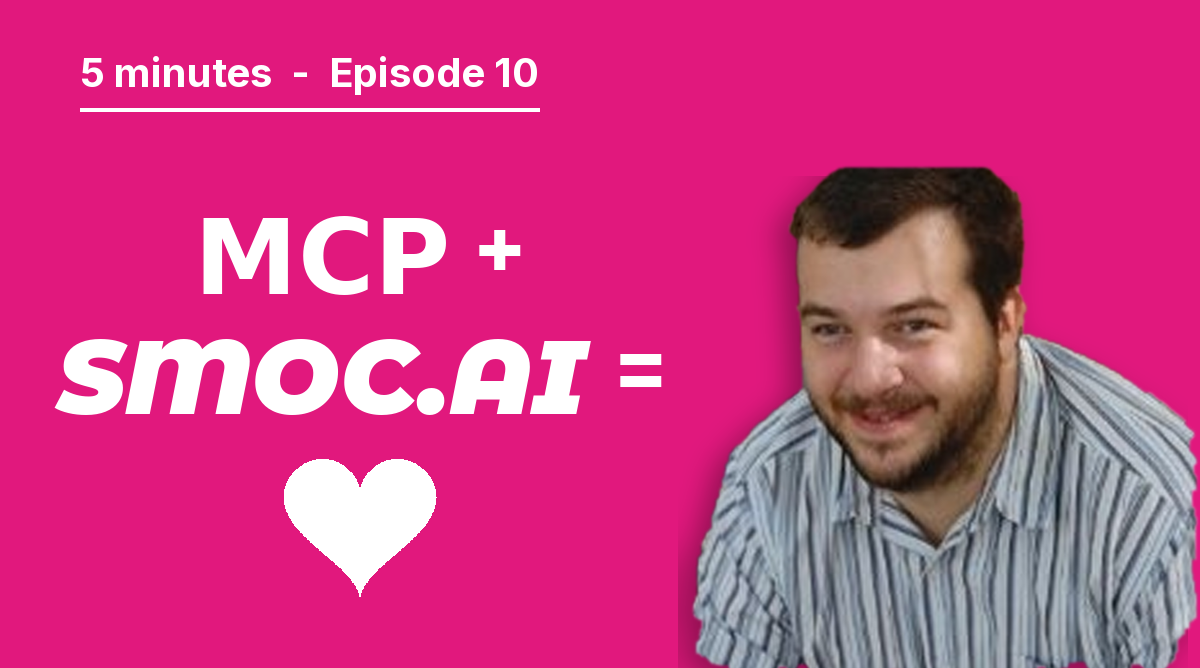
MCP + SMOC.AI = ❤️ – And Here's Why It Means More Than You Think
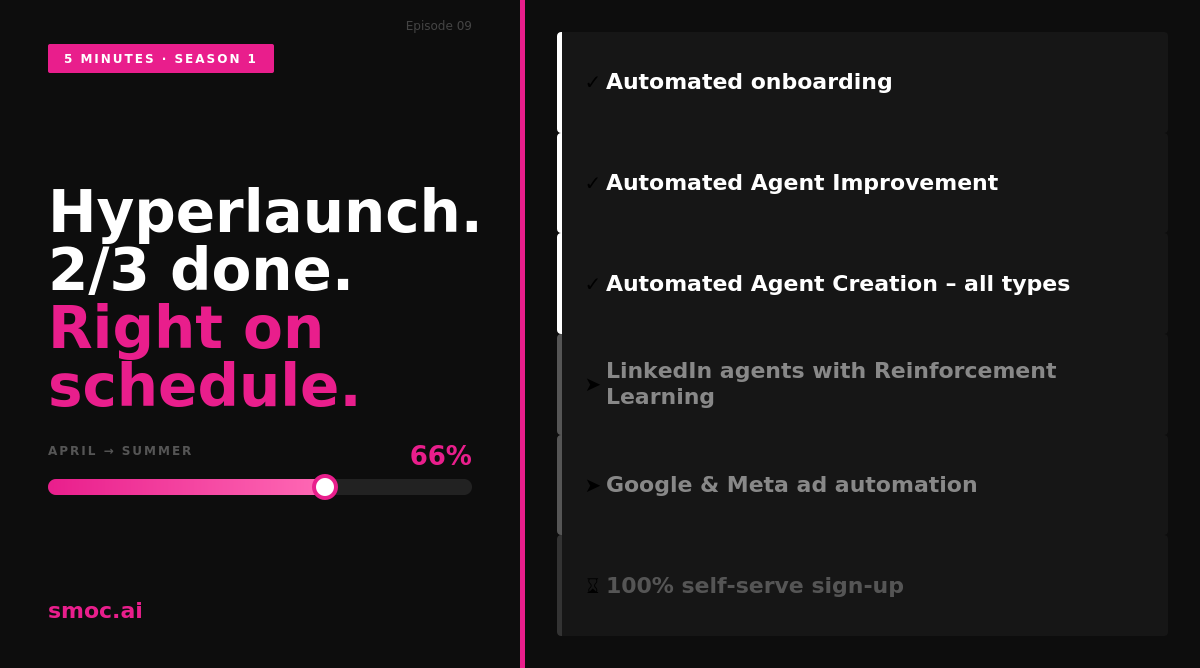
Season 1, Episode 10 of "5 Minutes" – documenting SMOC's journey toward becoming a fully AI-driven company, and our goal of enabling any customer to launch their first AI sales agent in under 5 minutes.
Pictured: Christian Kvalheim, who built SMOC's MCP integration and our AI core.
MCP – Model Context Protocol – is not just a technical buzzword. It's the architecture that allows AI agents to actually act, not just talk.
We've built SMOC's entire platform on MCP as the foundational architecture. That means every function we have – contacts, company data, flow analysis, agent recommendations, flow KPIs and much more – is available as MCP actions directly in any AI client. Claude Desktop, Claude Code, Cursor, VS Code, or your own backend system – connect SMOC with a single API key and you're up and running. At launch, read functions are open to everyone, and write functions will follow progressively.
Why does this matter?
First, it's a perfect fit for our multi-channel strategy. One shared protocol across LinkedIn, Meta, Google, email and your own website. One architecture that scales.
Second, it strengthens our reinforcement learning model. When every action flows through MCP, our RL model gets a consistent signal across all channels – and learns faster from what actually converts.
Third, it fits hand in glove with our token-based pricing model. You pay for actions, not seats. MCP makes it possible to measure and price every action precisely – regardless of which channel or client triggered it. See our pricing model here: smoc.ai/pricing
Christian , who built both the MCP integration and large parts of our AI core, has made it possible to connect SMOC to any AI client in minutes. That in itself is a small proof of the 5-minute principle in practice.
Read how to connect SMOC to Claude or any other AI client here: smoc.ai/eguides/connecting-smoc-with-mcp-to-claude-or-any-other-ai-based-client
👉 Follow the full series here: smoc.ai/blog/categories/5-minutes-series
Shipped this month — June 2026 release log.